PT PMA for Bali freehold property: how it works
Foreign buyers cannot hold SHM titles directly. Here is how a PT PMA lets you purchase and operate a Bali freehold property legally.

Updated on:
April 20, 2026



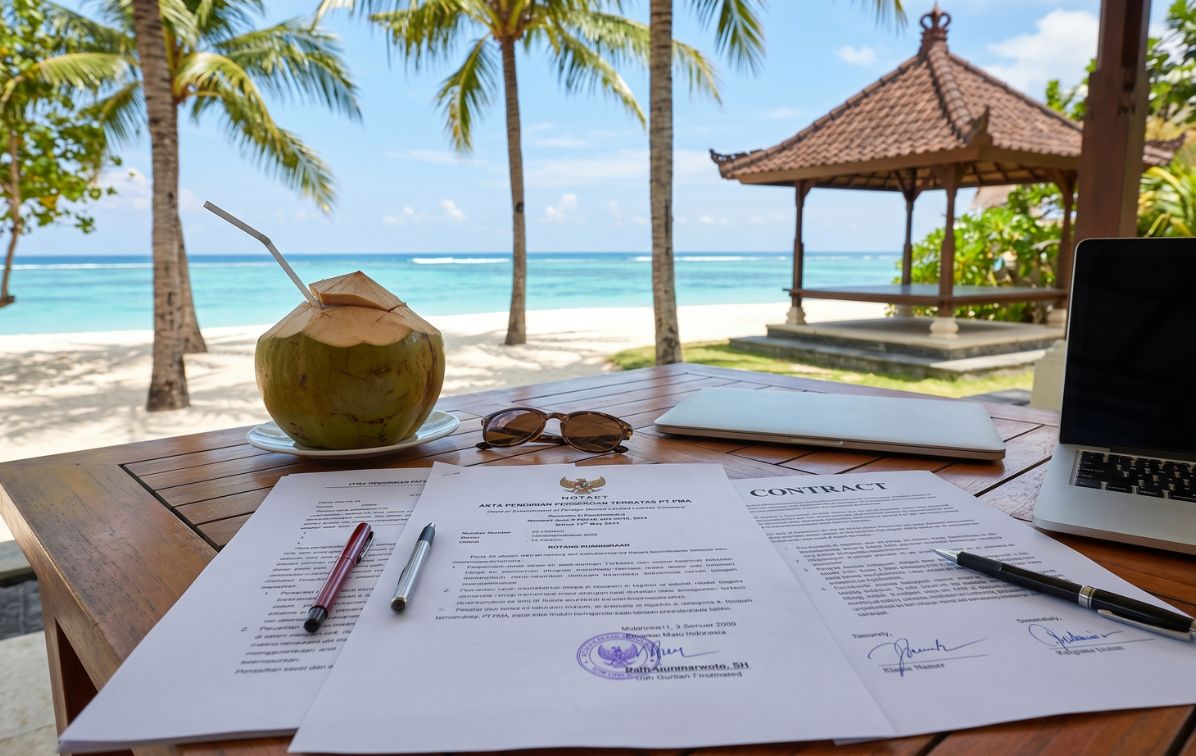
Foreign buyers cannot hold SHM titles directly. Here is how a PT PMA lets you purchase and operate a Bali freehold property legally.
Foreign buyers cannot hold SHM titles directly. Here is how a PT PMA lets you purchase and operate a Bali freehold property legally.
If you are a foreign buyer looking at a property listed as freehold in Bali, there is one thing to understand from the start: you cannot hold that title in your own name.
Hak Milik, the SHM title that makes a property "freehold," is restricted under Indonesian law to Indonesian citizens.
What you can do is purchase it through a PT PMA, a foreign-owned Indonesian company, which holds the property under a different title called HGB.
This article explains how that works, how to set up the PT PMA, and what running the rental operation looks like afterward.
When a property sitting on SHM land is purchased by a PT PMA, the title must be converted from Hak Milik to Hak Guna Bangunan (HGB) before or during the transaction.
These are two distinct legal titles:
The conversion from SHM to HGB is a standard part of the transaction when a PT PMA acquires what is commonly called a freehold property.
The process is handled through a notary and the National Land Agency (BPN).
Once converted, the title is held by the PT PMA, not by you personally. For more context on how these titles differ in a Bali investment context, see our article on freehold vs leasehold in Bali.
Shareholders and capital
These are two different obligations and it is important not to confuse them. The paid-up capital is what you inject into the company.
The total investment plan is a declared figure that must align with your actual operations and is reported through LKPM quarterly filings.
To make this concrete: a foreign investor purchasing a villa for USD 1,000,000 would declare that property acquisition as part of their total investment plan. At current exchange rates that figure sits well above the IDR 10 billion investment plan threshold, so that obligation is satisfied by the investment itself.
The paid-up capital of IDR 2.5 billion remains a separate requirement that must be reflected in the company's registered capital structure. In practice, the property value, setup costs, and initial operating capital all contribute to what gets declared as the total investment, and a local notary or compliance provider will help structure this correctly during registration.
Board
Registered address
KBLI code
The sequence runs as follows:
The full process typically takes three to six weeks. The OSS system handles the NIB and license tracking digitally, but a notary is required for the deed stage and cannot be bypassed.
Documents required from shareholders and directors:
Documents required for the company:
If you want to be introduced to parties who can facilitate and manage the whole setup process, we can help connect you with the right people.
Once the PT PMA is registered and the property is operating as a rental, the company carries ongoing compliance obligations:
For most foreign investors this is the part that looks most daunting on paper.
In practice, it does not need to add any complexity to how you run the property. The compliance layer, including tax filings, LKPM reporting, bookkeeping, and license renewals, can be fully delegated to a local accounting firm.
Many Bali-based operators handle it this way, paying a fixed monthly fee to a local provider and receiving no more involvement than reviewing an occasional summary. You retain control of the company while someone else manages the administrative obligations on your behalf.
What this means in practice is that owning and operating through a PT PMA does not require you to become fluent in Indonesian tax law or to hire an in-house finance team. The structure is designed for foreign investors, and the local service ecosystem around it reflects that.
If you plan to spend time in Bali managing the property, the PT PMA gives you a pathway to a legal stay permit:
The distinction matters because immigration data is increasingly cross-referenced with OSS and tax records in Indonesia. Misclassifying your role creates compliance exposure.
Setting up a PT PMA can look complex from the outside.
The reality is that the process is more streamlined and flexible than it appears, and not everything covered in this article will necessarily apply to your specific situation. The requirements vary depending on your KBLI classification, shareholding structure, and how you plan to operate the property. A good local notary or compliance provider will quickly narrow down what actually applies to you.
Once the company is registered, the ongoing compliance obligations can be fully delegated. You do not need to be involved in the day to day administrative side of running a legal entity in Indonesia. Most investors are not.
%20(3).jpg)
.jpg)
%20(7).jpg)
%20(6).jpg)
%20(4).jpg)
%20(3).jpg)