Bali's iconic Subak system faces challenges from modern development. Explore the solutions for preserving this vital cultural and ecological heritage.
The Subak system in Bali is an ancient, community managed irrigation network and a profound cultural philosophy, but its existence is threatened by modern development, which disrupts the island's water balance and requires a shift towards sustainable practices to survive.
What is the subak system
When we talk about the Subak system, it's easy to just think of rice paddies, water, but it's so much deeper than that.
Imagine a system, a living network, that’s been running since around the 9th century. We're talking about more than a thousand years of continuous, sustainable agriculture.
It’s not just a bunch of canals and dams; it’s a social and spiritual contract. At its core, the Subak is a community of farmers, a democratic cooperative, who manage the flow of water from the mountains down to the fields. Everyone gets a say. Everyone shares the responsibility.
And this is where it gets really interesting. The entire thing is built on a philosophy called Tri Hita Karana.
It basically means the three causes of wellbeing, which are harmony with God, harmony among people, and harmony with nature. Every decision, from when to plant to how water is shared, is filtered through this lens.
It’s why each Subak has a central water temple. It's not just for show; it’s the spiritual and literal hub where these communities meet, perform rituals, and ensure the balance is kept.
So you see, it’s a physical irrigation system, yes, but it’s also a worldview woven into the very landscape of Bali. It’s a masterpiece of human engineering and spiritual respect for the environment.
So how does this ancient tech work
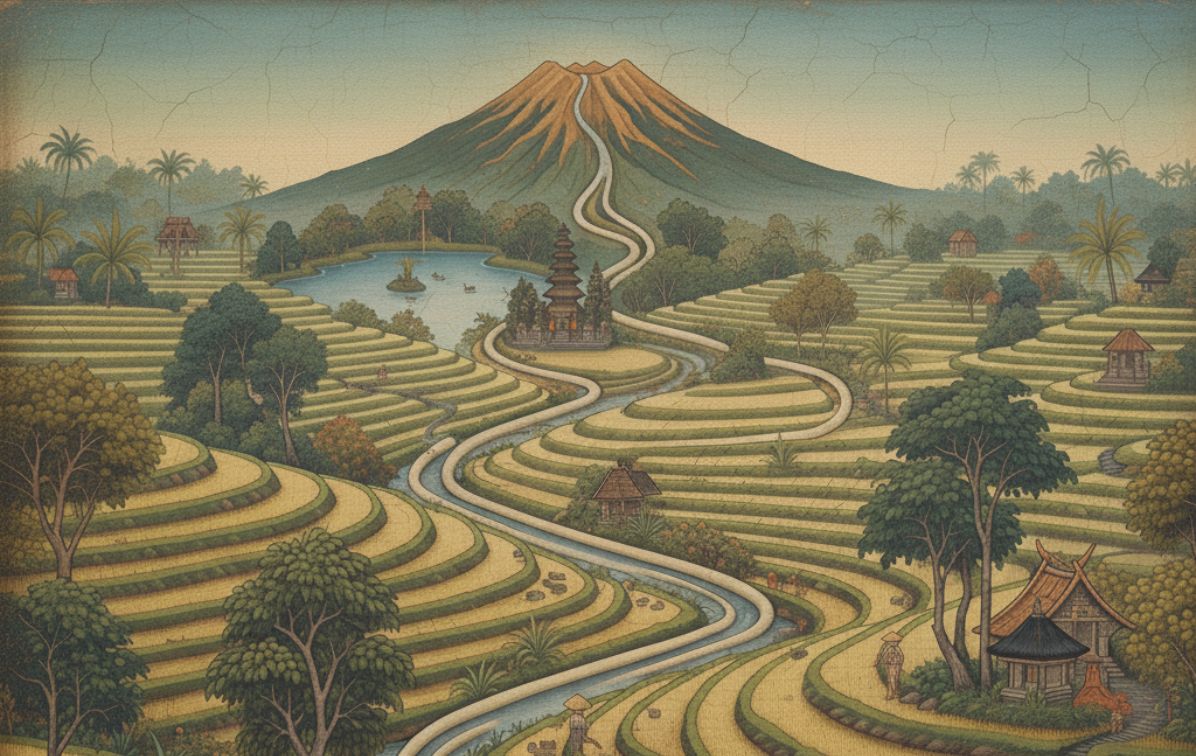
It’s one of those things that’s brilliantly simple in concept but incredibly complex in execution. The whole system is gravity fed. No pumps, no modern machinery, just an intricate understanding of the land's contours. It’s pure genius, honestly. Here’s a quick breakdown of the journey water takes.
- The sacred source: It all starts up in the mountains, at a spring or a lake. These sources are considered holy, the origin of life giving water. The reverence for the source dictates how the water is treated all the way down.
- The main arteries: From the source, water is guided into a network of primary canals and tunnels. And some of these tunnels are incredible feats of engineering, carved by hand through solid rock centuries ago to connect one valley to another.
- Weirs and diversions: Along the way, small dams called weirs are used to manage the water level and divert it into smaller channels. Think of it like a complex circulatory system for the earth.
- Fair shares for all: These smaller channels then feed the individual terraced paddies. The distribution is meticulously managed by the Rice field workers community, led by a headman called the pekaseh. They hold meetings to ensure every farmer gets their fair allocation. It’s all about cooperation.
This cooperative management prevents conflicts and ensures the entire system, which can span hundreds of hectares, functions like a single organism. It’s a testament to how human communities can work in perfect sync with their environment when they have a shared purpose and a deep respect for natural resources.
The problem we're all seeing
Bali is changing. Fast.
Tourism, new villas, people moving here, sprawling resorts... it’s a development boom. And while that brings economic benefits by changing the lives of many locals, it’s putting the Subak as well as other realities on a collision course with modernity.
The biggest issue is land conversion. Every time a terraced rice paddy is sold and paved over for a new building, a vital piece of this ancient system is destroyed. It’s like cutting off a vein.
The consequences are immediate and severe, creating a domino effect of problems.
- Disrupted water cycle: Rice paddies act as giant natural sponges, absorbing rainwater and recharging the island's groundwater. When you replace them with concrete, the water has nowhere to go. This leads to massive surface runoff that overwhelms old drainage systems, causing the flash floods we see more and more often.
- Ecological instability: It’s not just about losing pretty scenery; it’s about disrupting the fundamental hydrological stability of the entire island. By dismantling this masterclass in water management piece by piece, we're creating a much bigger, more expensive problem to solve down the line.
- Cultural erosion: Beyond the ecological disaster, there's the cultural loss. When the fields go, so does the community structure, the spiritual connection, and a way of life that has defined Bali for a millennium.
Finding a way forward
So what do we do? We can’t just halt all development, that's not realistic. The solution has to be about smart, sustainable integration. It’s a puzzle that requires everyone, from the government to developers to the local communities, to work together. The approach needs to be multi faceted, focusing on a few key areas.
- Strengthen regulations: Land use regulations need to have real teeth. This means iron clad protection for critical Subak areas and requiring thorough environmental impact assessments before a single shovel hits the ground on any new projects, as well as changing re-zoning parameters and urban planning.
- Implement green infrastructure: Developers must be part of the solution. This means embracing concepts like permeable surfaces for parking lots that allow water to soak into the ground, or designing properties with rain gardens and bioswales to capture and filter runoff naturally (biophilic architecture). It’s about working with the water cycle, not against it.
- Modernize water management: Bali's public stormwater systems need a serious upgrade. Are needed systems designed for the current reality, not the reality of fifty years ago, to handle the increased runoff from developed areas.
- Empower local communities: This is the most important piece. The farmers hold centuries of accumulated wisdom about the land and water. Any viable solution must honor their knowledge and give them a central role in planning the future, creating an economic model that values preservation over destruction.
Conclusion
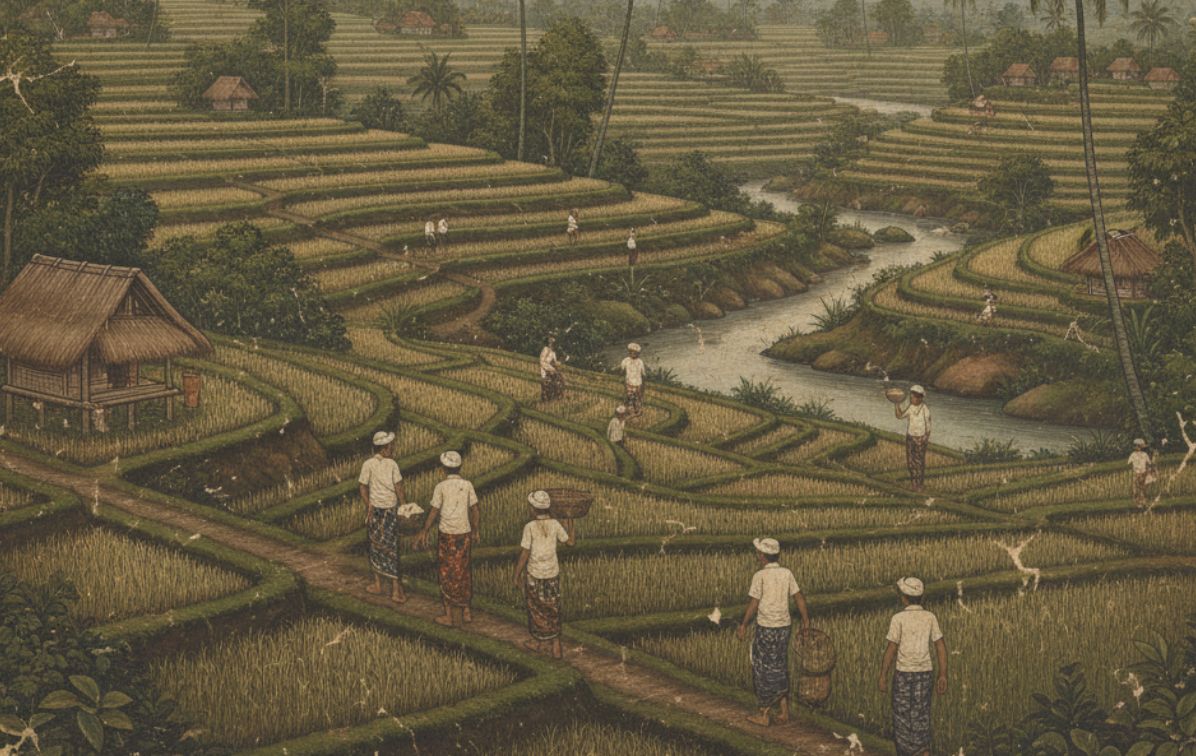
When you look at a Balinese rice terrace, you’re not just seeing a field. You’re seeing a living, breathing system that is equal parts agriculture, community, and spirituality.
The Subak is a legacy, a gift from the past that has sustained Bali for centuries. Its current struggle against uncontrolled development is a critical moment for the island.
The path forward isn't about choosing between tradition and progress; it's about weaving them together.
By enforcing smarter regulations, integrating green design, and empowering local communities, we can ensure this incredible ecological and cultural treasure doesn't become just a memory.
The future of Bali's unique harmony really does depend on it.